
Why Airflow Matters in Refrigerated Warehousing | Cold Storage Best Practices
Learn how proper airflow in cold storage protects product temperature, reduces spoilage risk, and ensures compliance with food safety standards.
Why Airflow Matters in Refrigerated Warehousing
SEO Elements:
Why Airflow Matters in Refrigerated Warehousing
When you think about cold storage, you probably focus on temperature setpoints or freezer capacity—but one of the most overlooked (yet critical) elements of cold chain integrity is airflow.
Whether you're storing seafood, meat, produce, or dairy, poor airflow in a refrigerated warehouse can lead to hot spots, uneven freezing, condensation, and even product loss. In this post, we explain why airflow is a cold storage essential—and what your storage provider should be doing to get it right.
What Does “Airflow” Mean in Cold Storage?
Airflow refers to how cold air is circulated throughout a refrigerated room, freezer, or container. It’s not just about blasting cold air into a space—it’s about making sure the air moves evenly and continuously around and through the stored products.
This includes:
Vertical airflow to reach all levels of racking
Horizontal airflow to ensure edge-to-center consistency
Forced air movement using industrial fans or ducts
Why Airflow Matters for Your Products
Temperature Consistency
Cold air naturally sinks, while warm air rises. Without good airflow, top racks may be warmer than bottom ones, and interior pallets may trap heat. That can lead to uneven storage temperatures—even if your thermostat reads correctly.
Product Integrity and Shelf Life
Improper airflow can cause:
Spoilage in certain sections of the load
Soft spots in frozen goods
Premature ripening of produce
Freezer burn on exposed items
All of this reduces product quality and can cost you money in rejected loads or customer complaints.
Compliance with Food Safety Standards
USDA and FDA regulations often require specific holding temperatures for meats, seafood, or dairy. If airflow is poor, a product’s core temperature might rise—even if room temps seem fine. This can trigger compliance failures during inspection or audits.
Signs of Poor Airflow in Cold Storage
Ice buildup in certain zones of the freezer
Condensation or moisture pockets
Strong cold drafts in one area, but warm areas elsewhere
Inventory near walls freezing faster than interior pallets
Increased spoilage despite proper temperature settings
If your inventory suffers from these issues, airflow might be the silent culprit.
Best Practices for Airflow in Refrigerated Warehousing
A professional cold storage provider should:
Use high-powered circulation fans to maintain constant movement
Design racking layouts that allow air to pass through (not just around) the products
Avoid overstacking or blocking vents
Space pallets properly so air can circulate between and beneath loads
Monitor airflow patterns with temperature mapping and sensors
Balance humidity and condensation to prevent moisture damage
At Royal Foods Distribution, we conduct airflow checks as part of our warehouse setup to ensure consistent conditions across all pallet positions.
Questions to Ask Your Cold Storage Partner
When evaluating a facility, ask:
How do you manage airflow inside each temperature zone?
Do you conduct temperature mapping or airflow testing?
Are there limits to how high or tight I can stack my pallets?
Do you have backup airflow systems in case of fan failure?
Airflow and Product Type: Not One-Size-Fits-All
Some products require more airflow than others. For example:
Frozen meat and seafood: Require consistent air movement for even freezing
Leafy greens: Can wilt or freeze if airflow is too strong or uneven
Cheese or dairy: Need controlled humidity and low airflow to avoid drying
An experienced warehouse team knows how to tailor airflow strategies based on product type, packaging, and storage duration.
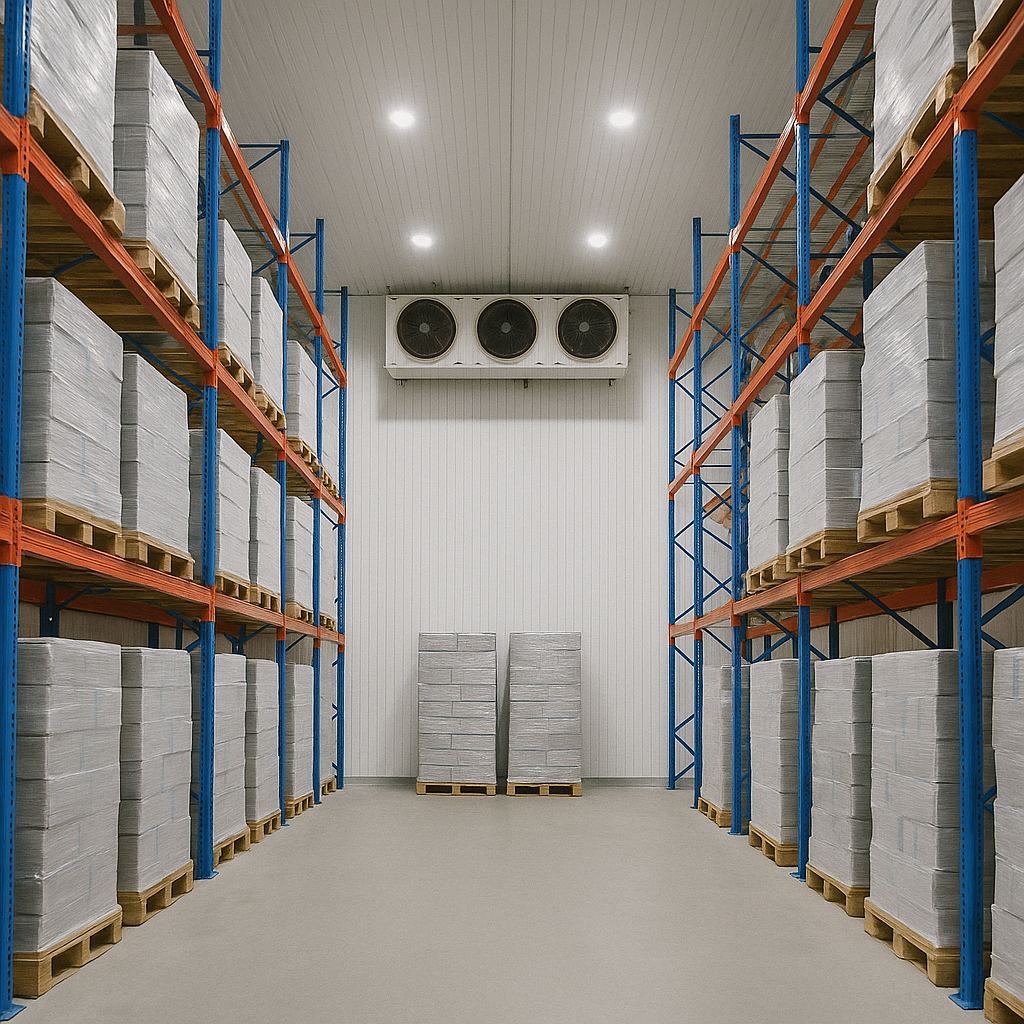
Image 1: Cold Storage Fan System
Image 2: Pallets in Cold Storage with Proper Spacing
Need Consistent Temperature Control for Perishables?
At Royal Foods Distribution, airflow management is part of our core infrastructure. Our USDA-registered cold storage facility in Santa Clara is designed to deliver consistent, reliable storage conditions across all pallet zones.
Whether you’re storing frozen seafood, imported dairy, or produce in transit, your inventory stays protected from hot spots and spoilage risks.
📦 Contact us to book airflow-optimized cold storage near the Port of Oakland and San Jose.
Need help exporting seafood to the US?
Royal Cold Storage provides end-to-end support — cold storage, transport, customs clearance, and distribution. Free quote within 24 hours.
Request a Quote →Related articles
 Cold Chain & Logistics
Cold Storage Disclaimers Explained
In cold chain logistics, misunderstandings often arise not because of poor service, but because of unclear expectations. One of the most misunderstood elements is the cold storage disclaimer.
 Warehousing & Storage
A Beginner’s Guide to Working With a Cold Storage Customer Service Team
New to cold storage? Learn how to communicate with customer service teams, what information they need, and how to avoid delays with your perishable shipments.
 Warehousing & Storage
How Cold Storage Facilities Protect Your Products During Unloading
Discover how cold storage facilities protect your perishable products during unloading—from temperature control to careful handling and fast processing.