
Cross-Docking: A Solution for a Smooth Supply Chain
In a logistics environment driven by speed, accuracy, and cost-efficiency, cross-docking has emerged as one of the most effective strategies to streamline supply chains. Unlike traditional warehousing, where goods may sit in storage for days or weeks, cross-docking enables the direct transfer of...
In a logistics environment driven by speed, accuracy, and cost-efficiency, cross-docking has emerged as one of the most effective strategies to streamline supply chains. Unlike traditional warehousing, where goods may sit in storage for days or weeks, cross-docking enables the direct transfer of products from inbound to outbound transportation with minimal or no storage in between. This approach dramatically reduces handling time, labor costs, and inventory carrying costs—making it ideal for fast-moving and temperature-sensitive goods.
What Is Cross-Docking?
At its core, cross-docking is a logistics method that minimizes storage time by immediately sorting and transferring incoming shipments to outgoing transport vehicles. This process takes place in a specially designed dock area where inbound products are received on one side, sorted or consolidated as needed, and loaded onto outbound trucks on the other.
For businesses dealing in perishable or time-sensitive inventory—such as frozen foods, pharmaceuticals, or produce—this method helps preserve product quality and reduce waste. It also simplifies the supply chain by reducing inventory storage requirements and cutting lead times.
Benefits of Cross-Docking
Reduced Storage Costs By limiting or eliminating the need for long-term storage, companies save on warehousing costs and reduce their dependency on large storage facilities.
Faster Order Fulfillment Goods can move quickly from supplier to customer, which helps businesses meet tight delivery windows and consumer demand for quick turnaround.
Minimized Risk of Spoilage Especially critical in cold chain logistics, reducing time in storage helps preserve the freshness and quality of perishable items.
Enhanced Inventory Visibility With fewer goods sitting idle, businesses gain a clearer picture of real-time inventory, allowing for more responsive demand planning.
Is Cross-Docking Right for You?
Cross-docking is ideal for businesses with high-volume shipments, perishable goods, or just-in-time (JIT) distribution models. It works particularly well when product demand is predictable and when technology allows for accurate forecasting and shipment coordination.
How Cross-Docking Works at Our Facility
At our Santa Clara cold storage facility, we’ve optimized the cross-docking process for high efficiency and regulatory compliance. When a shipment arrives:
It is immediately unloaded at designated receiving docks.
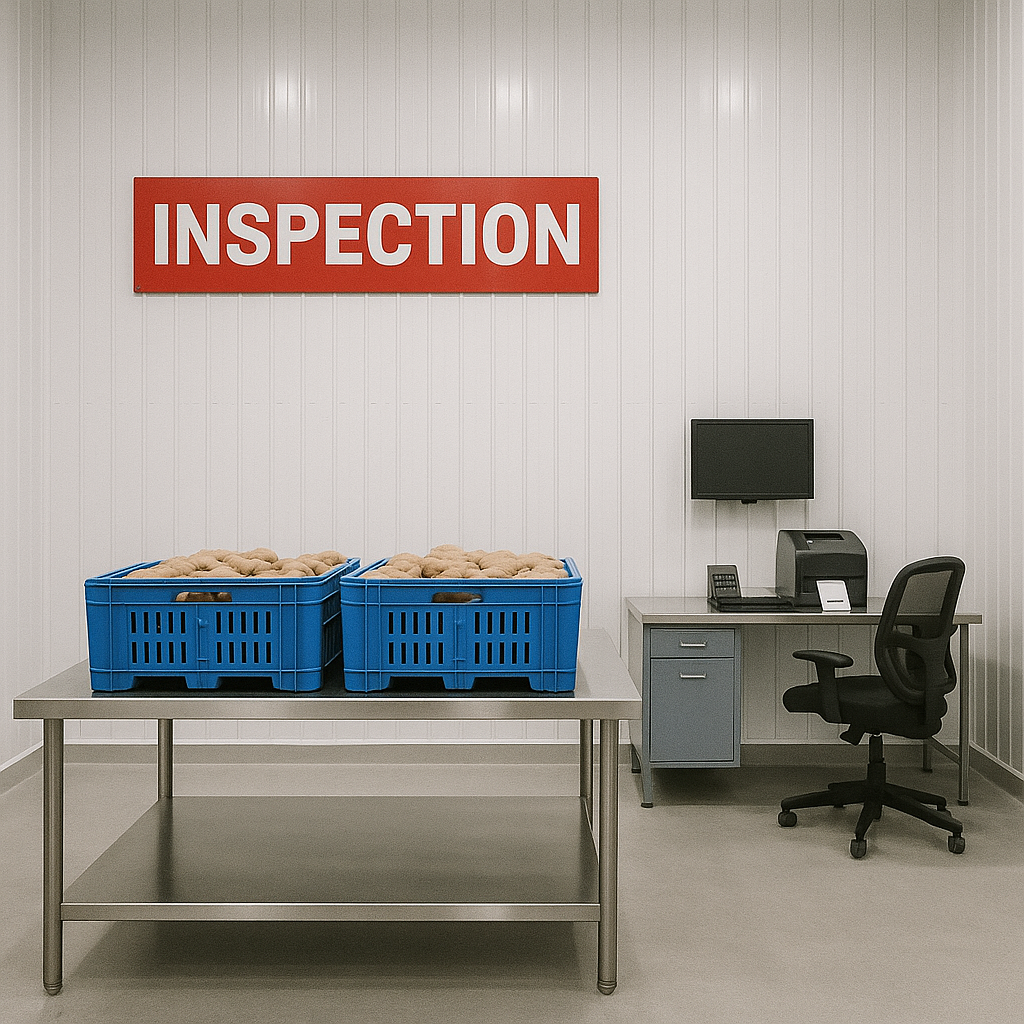
Each product is inspected for quality, temperature, and condition.
Based on client instructions, products are either directly loaded onto outbound trucks or briefly staged in a temperature-controlled zone.
Tracking systems ensure all units are accounted for with full transparency and traceability.
Our team is trained to handle USDA- and FDA-regulated items, ensuring compliance even during rapid turnover. This allows us to service clients with strict food safety and delivery requirements, whether they’re distributing to retail chains or food processors.
If you’re looking to speed up your supply chain, reduce costs, and ensure product integrity, cross-docking could be the solution you need. Our facility offers the infrastructure, personnel, and experience to implement cross-docking with precision and care.
Need help exporting seafood to the US?
Royal Cold Storage provides end-to-end support — cold storage, transport, customs clearance, and distribution. Free quote within 24 hours.
Request a Quote →Related articles
 Cold Chain & Logistics
Cold Storage Disclaimers Explained
In cold chain logistics, misunderstandings often arise not because of poor service, but because of unclear expectations. One of the most misunderstood elements is the cold storage disclaimer.
 Warehousing & Storage
A Beginner’s Guide to Working With a Cold Storage Customer Service Team
New to cold storage? Learn how to communicate with customer service teams, what information they need, and how to avoid delays with your perishable shipments.
 Warehousing & Storage
How Cold Storage Facilities Protect Your Products During Unloading
Discover how cold storage facilities protect your perishable products during unloading—from temperature control to careful handling and fast processing.