
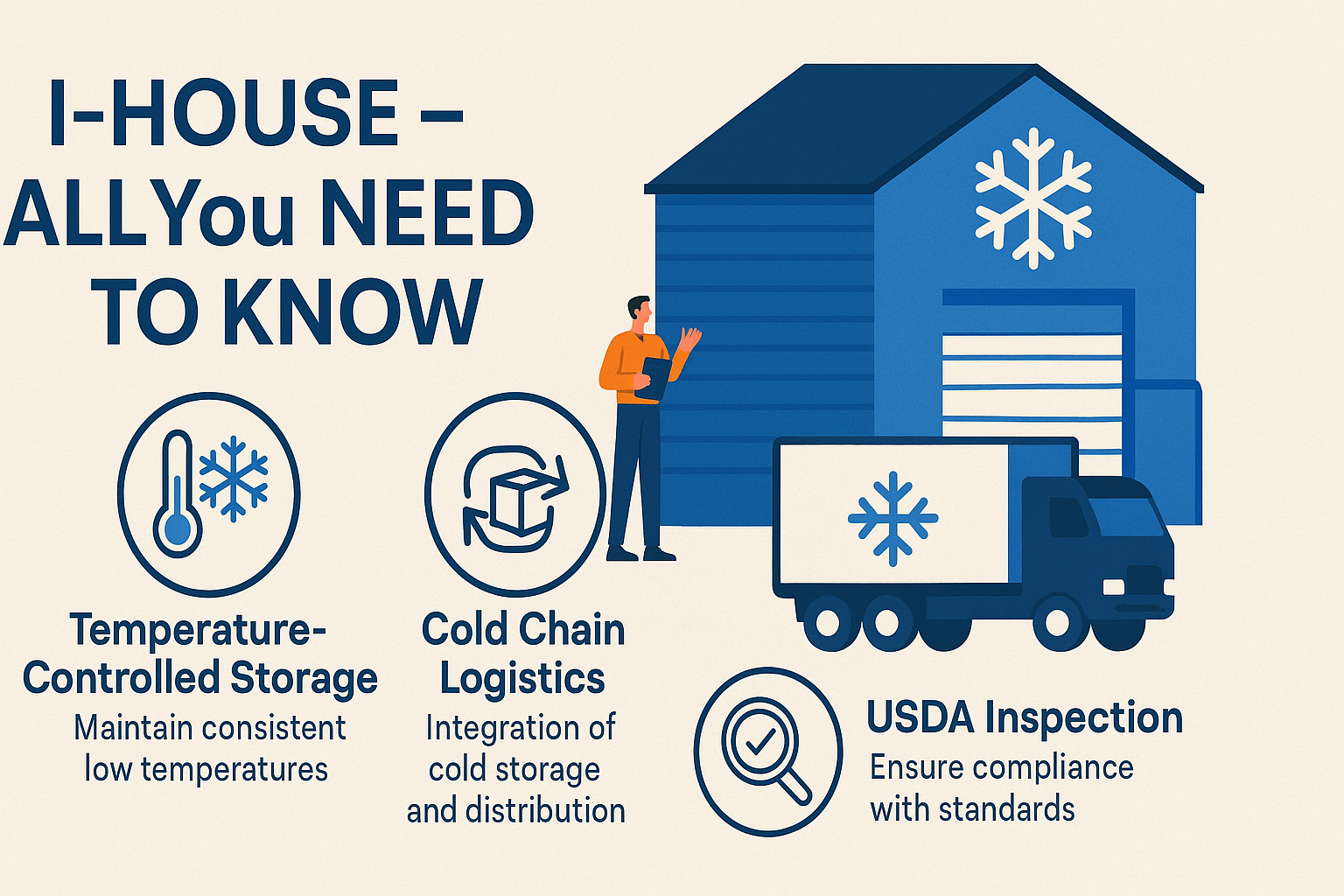
How Food Grade Warehousing Protects Your Brand and Inventory
In the food logistics industry, your product isn't the only thing on the line—your brand reputation is too. Choosing the right food grade warehousing partner ensures your goods stay safe, compliant, and traceable from port to shelf.
In the food logistics industry, your product isn't the only thing on the line—your brand reputation is too. Choosing the right food grade warehousing partner ensures your goods stay safe, compliant, and traceable from port to shelf.
Whether you're importing frozen seafood, chilled dairy, or dry packaged goods, understanding what “food grade” means—and how it protects your brand—is critical.
What Is Food Grade Warehousing?
Food grade warehousing refers to storage facilities that meet strict cleanliness, temperature, and handling standards required for storing edible products. These standards are often set by:
The Food and Drug Administration (FDA)
The U.S. Department of Agriculture (USDA)
Local health and food safety agencies
A true FDA warehouse in Santa Clara goes beyond just being clean. It maintains proper infrastructure, pest control systems, traceability, and temperature control to meet federal regulations and protect your supply chain.
How It Protects Your Inventory
Contamination Prevention Facilities maintain strict zoning, separating frozen, chilled, and dry goods. All storage racks and equipment are food-safe and regularly sanitized. Pallet conditions are closely inspected to prevent cross-contamination.
Temperature Control and Monitoring Temperature-controlled warehouses monitor their climate 24/7. Backup systems protect your inventory during power outages, and alerts are triggered for any temperature deviations.
Pest Control and Sanitation Licensed pest management and a rigorous cleaning schedule prevent infestation and ensure compliance with food safety regulations. Facilities undergo routine internal and third-party audits.
Proper Handling and Rotation Forklift operators and warehouse staff are trained in food-safe handling. Products are rotated using FIFO or FEFO inventory systems to protect freshness and minimize loss.
How It Protects Your Brand
Regulatory Compliance (FDA & USDA) An FDA warehouse in Santa Clara is regularly inspected and equipped for USDA reinspection or FDA holds. This reduces your risk of rejected cargo, port delays, and costly compliance violations.
Minimized Spoilage and Recalls Traceable inventory systems and climate integrity reduce the chances of temperature abuse, mislabeling, or storage errors—common causes of costly product recalls.
Customer and Retailer Trust Distributors, retailers, and end buyers expect assurance that your product has been handled in a certified, food-grade environment. Meeting that expectation strengthens your supply chain reputation.
Shelf Life and Product Quality Proper temperature, airflow, and product spacing preserve food quality, extend shelf life, and prevent in-store issues like discoloration, odor, or texture loss.
Why It Matters in Santa Clara and the Bay Area
The Bay Area is a high-demand hub for perishable goods, with shipments flowing in daily from the Port of Oakland and international suppliers. A food grade warehouse near Santa Clara isn’t just convenient—it’s a strategic necessity. It helps importers respond quickly to retail demands, FDA inspections, or unexpected delivery windows.
Royal Foods Distribution operates a fully compliant, food grade cold storage facility in Santa Clara with USDA inspection capabilities and I-house number I-95. We provide short-term and long-term storage for frozen, chilled, and dry products, and our facility is optimized to protect your brand through every link in the cold chain.
Need Food Grade Warehousing Support?
Contact Royal Foods Distribution to secure a compliance-ready cold storage solution that protects your product and your reputation.
Top of Form
Bottom of Form
Need help exporting seafood to the US?
Royal Cold Storage provides end-to-end support — cold storage, transport, customs clearance, and distribution. Free quote within 24 hours.
Request a Quote →Related articles
 Cold Chain & Logistics
Cold Storage Disclaimers Explained
In cold chain logistics, misunderstandings often arise not because of poor service, but because of unclear expectations. One of the most misunderstood elements is the cold storage disclaimer.
 Warehousing & Storage
A Beginner’s Guide to Working With a Cold Storage Customer Service Team
New to cold storage? Learn how to communicate with customer service teams, what information they need, and how to avoid delays with your perishable shipments.
 Warehousing & Storage
How Cold Storage Facilities Protect Your Products During Unloading
Discover how cold storage facilities protect your perishable products during unloading—from temperature control to careful handling and fast processing.